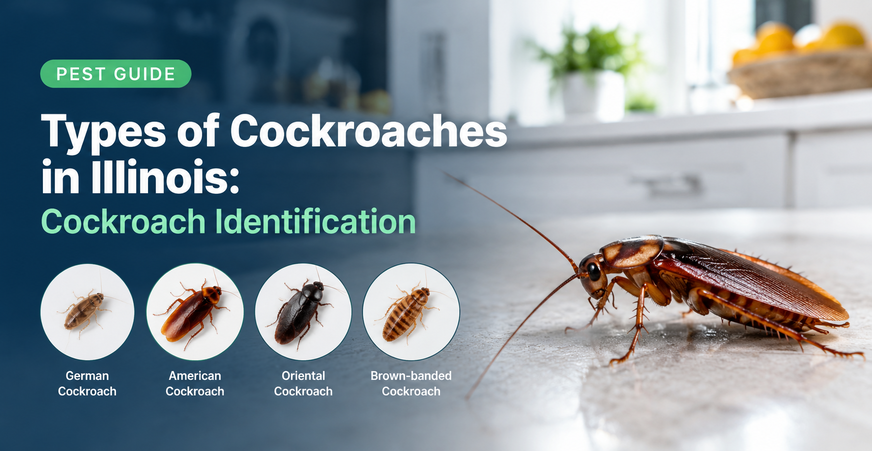
Four species cause most cockroach problems in Illinois buildings: German, American, Oriental, and brown-banded cockroaches. Identifying the species matters because each prefers different hiding places, reproduces at a different pace, and points to a different source. A German cockroach in a kitchen usually means an indoor population, while a single large cockroach in a basement may be an outdoor species that wandered in. Knowing which one you have tells you where to look and how serious the problem may be.
Key Takeaways
- The Illinois Department of Public Health (IDPH) identifies the German cockroach as the most common kitchen roach, and it cannot survive Illinois winters outdoors.
- Size, color, and the markings behind the head are the fastest clues. Egg cases, droppings, and location help confirm them.
- One sighting does not prove a breeding infestation. Repeated daytime sightings, mixed sizes, droppings, and egg cases are stronger signs.
- Appearance alone can mislead, especially with young nymphs, so a professional can confirm the species.
- Cleaning and sealing help, but they rarely clear an established infestation on their own.
Cockroach Types in Illinois at a Glance
IDPH’s structural pest guidance covers the species Illinois homeowners are most likely to encounter. The sizes below are approximate and come from that guidance.
| Species | Approx. size | Color and key features | Preferred habitat | Where you may find it |
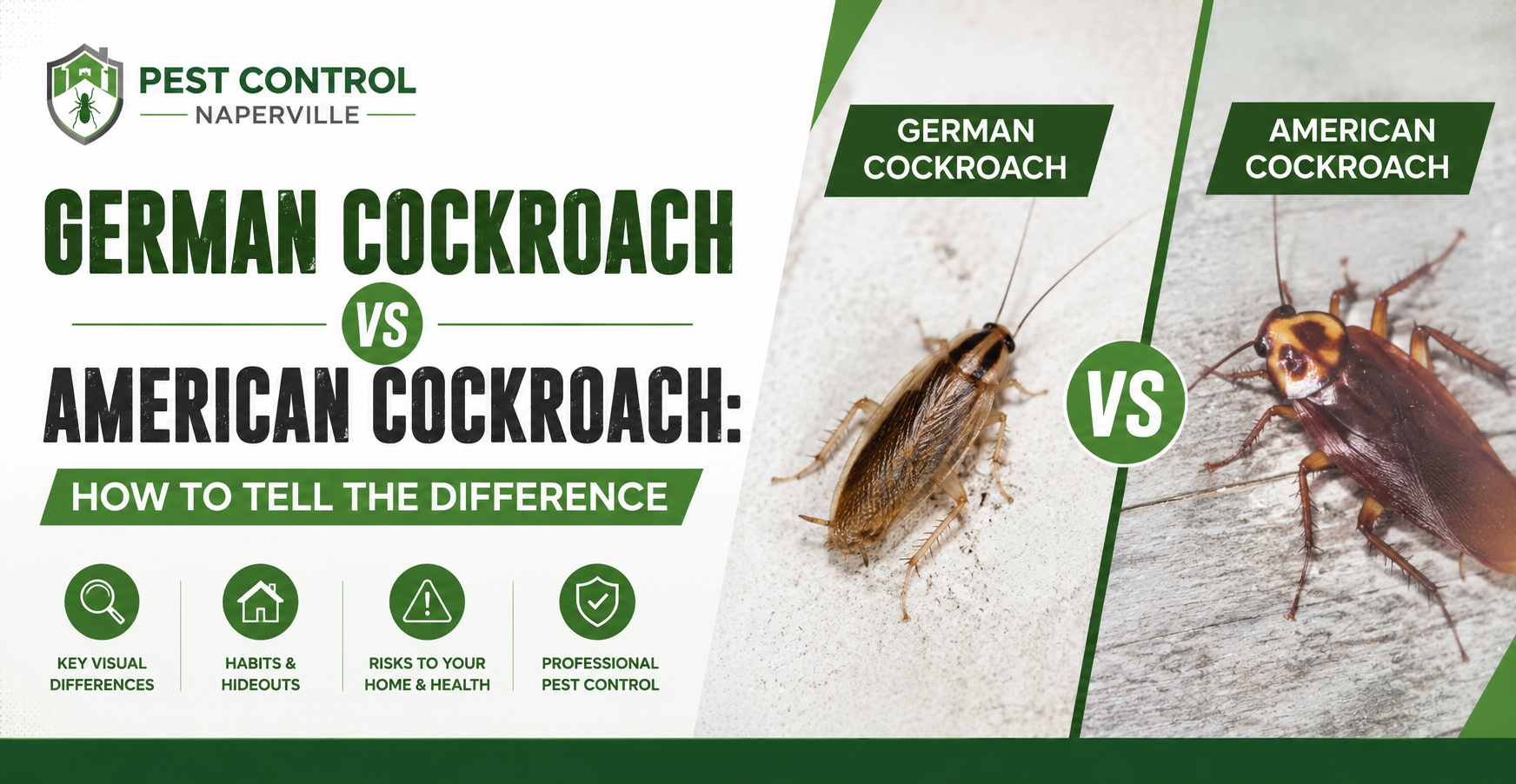
| German | About ½ inch | Light brown to bronze; two dark stripes just behind the head | Warm, humid spots near food and water; lives indoors year-round | Kitchens, bathrooms, behind stoves, refrigerators and dishwashers, wall and cabinet voids |
| American | Up to 2 inches | Reddish brown, lighter around the edge of the area behind the head; wings reach the end of the body and can fly in warm weather | Sewers, boiler rooms, basements, steam tunnels | Basements, utility rooms, commercial food areas; may live outside or in adjacent structures |
| Oriental | Up to 1¼ inches | Dark brown to blackish, wide flat body, no markings; males have short wings, females only stubs; cannot fly | Cool, damp areas, including leaves and mulch around foundations | Basements, crawl spaces, garages |
| Brown-banded | Slightly smaller than German | Banded wings and abdomen; males golden orange with a dark band, females darker | Warmer (about 80°F), drier spots, often higher up | Electronics, motor housings, light fixtures, upper cabinets, bedrooms |
| Woods (Parcoblatta) | Males usually under 1 inch | Wings extend past the abdomen; strong fliers | Outdoors in woodpiles, stumps, logs and trees | Near lights in spring; arrives with firewood |
How to Identify a Cockroach
Start with size, color and markings
Size narrows the field quickly. A roughly half-inch, tan-to-bronze insect with two dark stripes behind the head is most likely a German cockroach. A reddish-brown insect up to 2 inches long fits an American cockroach. A broad, dark, unmarked insect with short wings or none fits an Oriental cockroach. Brown-banded cockroaches show banding on the wings or abdomen rather than the German cockroach’s paired head stripes.
Check egg cases, droppings, and other clues
Egg cases (oothecae) add information. A female German cockroach carries her case on the end of her abdomen until about 24 hours before hatching, and each case holds 30 to 48 eggs. Oriental cases hold about 16 eggs, and American cases hold 14 to 16, typically left near food. German cockroaches also leave dark speckling where they gather, which carries scent signals that attract others. Shed skins and sticky monitors placed along walls can show where activity is concentrated.
Why appearance alone may not be enough
Nymphs are smaller and wingless, and their color changes as they grow. Oriental nymphs start brown and darken, while brown-banded nymphs are dark with cream bands behind the head. Wood cockroaches can be mistaken for pest species. If you cannot tell what you have, photograph the insect or keep a specimen in a sealed container. A technician or your county health department can confirm the species.
Indoor Pests vs. Outdoor Species That Wander In
IDPH notes that most domestic cockroaches are tropical in origin, and German cockroaches cannot survive temperate winters outdoors. German and brown-banded cockroaches are therefore the species most associated with established indoor populations, which breed wherever food, water, and shelter are available.
Oriental and American cockroaches sit in between. Oriental cockroaches can survive outdoors around foundations, and American cockroaches favor sewers and boiler rooms. Either may enter a home from outside, although IDPH says large populations can develop under favorable conditions. Wood cockroaches live primarily outdoors, and males fly to lights in spring. A single one at a window is more likely an outdoor visitor than a sign of an indoor colony.
Context helps. Daytime sightings, several sizes together, droppings or egg cases point toward breeding. IDPH adds that German cockroaches turning up in bedrooms or other non-food areas can indicate a heavy infestation, a shortage of hiding places or repellent pesticide use.
Where to Inspect
Cockroaches usually hide close to food. IDPH says German cockroaches tend to stay within about 10 feet of their food source, and young nymphs rarely stray more than 2 feet from shelter. Start under sinks, behind refrigerators, stoves and dishwashers, inside cabinets and around plumbing. A flashlight check after dark and sticky traps can help, as University of Illinois Extension notes.
For brown-banded cockroaches, check warm, higher spots such as upper cabinets, closets, light fixtures and electronics. For Oriental and American cockroaches, check basements, crawl spaces, garages and utility rooms, plus leaf litter and mulch around the foundation.
How Cockroaches Get Into Homes
University of Illinois Extension says German cockroach infestations are usually started by infested materials brought into a building, such as boxes, bags, used appliances, or furniture. In apartments, condos, and townhomes, IDPH says German cockroaches often travel through shared walls via gaps around pipes under sinks. Outdoor species can come in through exterior gaps, which is why IDPH recommends inspecting and sealing the building’s exterior. Wood cockroaches arrive with firewood or through doors left open near lights.
Basic Prevention
- Store food, pet food, and trash in sealed containers, and clean up grease and crumbs.
- Fix leaks and reduce moisture in kitchens, bathrooms, and basements.
- Seal gaps around pipes with silicone sealant or urethane foam, as IDPH suggests.
- Reduce cardboard and paper clutter, which gives roaches shelter.
- Keep firewood away from the house, and monitor with sticky traps.
These steps support control but rarely eliminate an established infestation alone. IDPH also warns that total-release foggers can scatter cockroaches to new locations and create fire hazards. Whatever products you use, follow the label.
When to Consider Professional Help
IDPH says cockroach control does not always require a professional, but hiring one is often best for heavy infestations or complicated buildings. Consider an inspection if sightings continue after cleaning, you find egg cases or nymphs, the source is unclear or you share walls with neighbors. Professionals also have tools, such as dust applicators and insect growth regulators, that consumers generally cannot buy.
Frequently Asked Questions
How can I tell a German cockroach from an American cockroach?
Check size first. German cockroaches are about half an inch long with two dark stripes behind the head, while American cockroaches grow up to 2 inches and are reddish-brown with lighter edging around that area. A small American nymph can resemble a German cockroach, so if you’re unsure, confirm with a professional.
Does seeing a large cockroach mean I have an infestation?
Not necessarily. Large American or Oriental cockroaches, or spring wood cockroaches, may be outdoor visitors. Repeated sightings, young nymphs, droppings, or egg cases suggest breeding.
Is an Oriental cockroach the same as a water bug?
IDPH uses “waterbug” as a nickname for the Oriental cockroach, associated with basements, crawl spaces and garages. The term is informal and may be applied to other insects.
What should I do after finding a cockroach indoors?
Note where and when you saw it, and capture it if possible. Place sticky monitors, clean up food and moisture, and seal gaps. Avoid foggers. If sightings continue, call a professional.
Are cockroaches a health concern?
IDPH says cockroaches can contaminate food and surfaces. Their shed skins and droppings can also trigger asthma and allergic reactions.
Can cockroaches survive Illinois winters?
German cockroaches cannot survive winters outdoors. Oriental cockroaches can survive around foundations in leaves and mulch.
Next Step
If you are unsure which cockroach you have or where it is coming from, an inspection can confirm the species and the source. Pest Control Naperville provides cockroach extermination in Naperville for homes and businesses, and you can reach the team through the contact page.